Summary
For a lot of businesses importing goods into the U.S., the last year was frustrating.
Every shipment felt more expensive. Costs kept increasing, margins became tighter, and many companies were paying additional tariffs without fully understanding how long the situation would continue. Most businesses simply accepted it because there was no other choice.
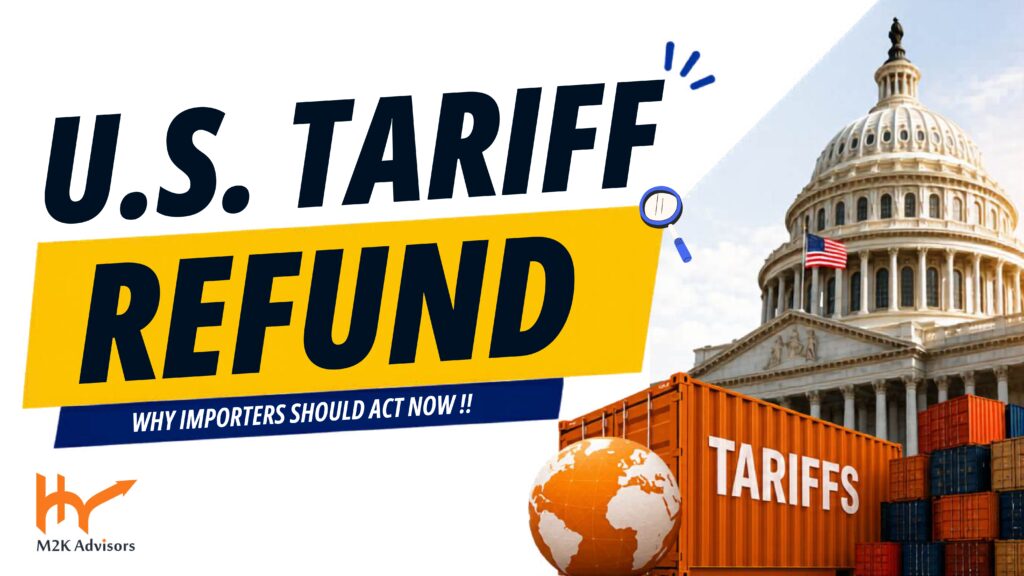
After the U.S. Supreme Court ruled against the IEEPA tariffs, businesses that paid those duties may now be eligible for refunds, along with interest. For some companies, this is not a small adjustment. It could mean recovering a serious amount of money that had already been written off internally.
But there is one important thing businesses should understand early: this is not an automatic refund.
There are timelines, filing conditions, eligibility checks, and a lot of paperwork involved. Companies that start reviewing their imports now will likely be in a much better position than those who wait until everyone rushes to file at the same time.
What is the IEEPA Tariff?
Back in February 2025, the U.S. government introduced additional tariffs using a law called the International Emergency Economic Powers Act, commonly known as IEEPA.
These tariffs affected imports from several countries, including China, Canada, Mexico, and India. Businesses importing goods into the U.S. suddenly found themselves paying more on shipments that were already becoming expensive because of freight costs and supply chain disruptions.
For importers, this was not just another policy update in the news.
It directly affected everyday business operations.
A shipment that was profitable earlier suddenly became less profitable. Finance teams had to rethink costing. Procurement teams had to explain higher import expenses internally. In some cases, businesses increased prices. In other cases, they absorbed the hit themselves just to stay competitive.
Over time, U.S. Customs and Border Protection collected nearly USD 166 billion under these tariffs.
At that point, most businesses assumed the money was gone permanently.
Very few expected the tariffs themselves would later be challenged and overturned.
Supreme Court ruling & its Impact
That changed when the U.S. Supreme Court ruled that the government did not actually have the authority to impose these tariffs under IEEPA.
Once the ruling came out, the tariffs were stopped.
For businesses, this completely changed the situation.
The duties they had already paid were no longer just historical costs sitting in old import records. Those payments suddenly became potential refunds.
CBP later introduced a refund process that allows eligible businesses to claim back the tariffs they paid during the affected period. In many cases, businesses may also receive statutory interest along with the refund.
For companies with large import volumes, this could turn into a meaningful recovery.
And honestly, many businesses are only now realizing how big the numbers could actually be once they start reviewing their import entries properly.
Refund mechanism
To handle the refund process, CBP introduced a system called CAPE within the ACE Portal.
That sounds technical, but in simple terms, it is the platform businesses now use to submit refund claims.
The first phase of the process started in April 2026.
Importers can either file claims themselves or work through customs brokers. But one thing businesses should not underestimate is how detailed the process actually is.
This is not a quick online form where money shows up a few days later.
Import records need to be reviewed carefully. Entry details need to match correctly. Supporting documents need to be checked properly. Filing timelines also matter a lot.
And this is where some businesses may run into problems if they wait too long.
Certain entries are only eligible within specific filing periods. If those windows pass, recovering the refund may become much harder or, in some cases, no longer possible.
That is why many companies have already started reviewing their historical import data instead of waiting for the process to become more crowded later.
Why Importers Should Act Now?
A lot of businesses are still in “we’ll look at it later” mode.
That usually happens because teams are busy, the process looks complicated, or people assume there is still plenty of time left.
But waiting may end up creating bigger problems.
The work involved is bigger than most businesses expect
Many companies assume they can pull a few reports and finish everything quickly.
In reality, import entries often need to be reviewed one by one. Data needs to be checked properly. Internal records need to match customs filings. Missing details may need to be corrected.
For businesses with a high number of shipments, this can take much longer than expected.
Filing volumes are expected to become very heavy
CBP has already acknowledged that the refund amount involved is massive.
Once more businesses begin filing claims, delays are almost guaranteed. That usually happens with any large-scale refund or compliance process.
Companies that move early are more likely to avoid last-minute pressure and filing bottlenecks.
Some businesses may lose eligibility by waiting
This is probably the biggest risk.
Some entries may move outside the eligible filing period if businesses delay taking action. Once that happens, recovering the duties becomes much more difficult.
In simple terms, businesses that wait too long could leave recoverable money behind.
The process is still evolving
Future phases, procedural updates, or legal developments may still change parts of the process later.
Businesses that start early are usually in a safer position because their claims are already in progress instead of sitting untouched.
How we can assist you
For many businesses, the hardest part is not understanding that refunds are available.
The hardest part is figuring out where to start.
That is where we help.
We support businesses through the entire process, starting from reviewing import data all the way until refunds are realized.
IDENTIFY
The first step is understanding whether refund opportunities actually exist.
This includes reviewing import records, identifying eligible entries, validating classifications, and estimating how much refund exposure may be available.
In many cases, businesses are surprised by how much value is sitting inside old import transactions.
PREPARE & FILE
Once eligible entries are identified, the next step is preparing filings correctly.
This includes support with ACE setup, banking requirements, documentation review, and CAPE declaration filings.
Small mistakes can slow things down, so getting the filing process right early becomes important.
MONITOR & RECOVER
The process does not stop after filing.
Claims still need to be monitored. Follow-ups may be required. Refund progress needs to be tracked properly.
As filing volumes increase, businesses that actively monitor the process are likely to avoid unnecessary delays.
Conclusion
The IEEPA tariff refund opportunity is one of those situations where businesses genuinely need to pay attention early.
A lot of companies are still assuming they will “deal with it later.” But once filing pressure increases and eligibility windows start closing, the process may become much harder than expected.
Right now, many businesses still have not fully reviewed their import data. Some may not even realize how much refund value could be hidden inside their old entries.
The companies that start early will likely have the strongest position — not just for preserving eligibility, but also for avoiding unnecessary stress later when everyone else starts rushing into the process.
For businesses that paid these tariffs, this may finally be a chance to recover money that once looked completely gone.
Frequently Asked Questions
Who can claim IEEPA tariff refunds?
Businesses that imported goods into the U.S. during the affected period and paid IEEPA tariffs may be eligible to file refund claims.
Is the refund process automatic?
No. Businesses need to review entries, prepare filings, and submit claims through the required process.
Can customs brokers file claims?
Yes. Authorized customs brokers can file claims on behalf of importers.
Why are businesses being told to act quickly?
Because some entries may eventually move outside the eligible filing window if businesses wait too long.
Do refunds include interest?
Eligible businesses may also receive statutory interest along with the refunded tariff amount.
Why choose M2K Advisors ?
The IEEPA refund process sits in a space where customs procedures, compliance, and financial recovery all come together.
For businesses, it can quickly become overwhelming, especially when there are hundreds or thousands of entries involved.
Our role is to simplify the process and help businesses move through it clearly and efficiently.
We help businesses:
- Review historical import data
- Identify eligible refund opportunities
- Prepare filings correctly
- Reduce delays and procedural issues
- Support the process until refunds are realized
Most importantly, we understand that businesses are not looking at this as just another compliance task.
For many companies, this is real money that can improve cash flow, reduce pressure on margins, and recover costs they never expected to see again.