Sales and use tax compliance in the United States presents a unique set of challenges for businesses. Unlike countries that operate under a single national sales tax system, the U.S. enforces sales tax at the state and local level, resulting in thousands of taxing jurisdictions. Each jurisdiction may have its own tax rates, taxability rules, compliance deadlines, and exemption requirements — meaning that selling the same product in different states can trigger completely different tax obligations.
The 2018 Supreme Court ruling in South Dakota v. Wayfair, Inc. brought about a significant shift. It allowed states to impose sales tax obligations on businesses even if they have no physical presence in the state, introducing the concept of economic nexus. Now, merely exceeding a certain threshold of sales or revenue in a state can create a sales tax obligation.
States have responded swiftly to implement and enforce economic nexus rules. As a result, businesses — especially remote sellers and online platforms — face greater compliance burdens and higher audit risks than ever before. Some states also apply sales tax to enumerated services, which may not be well known to out-of-state sellers.
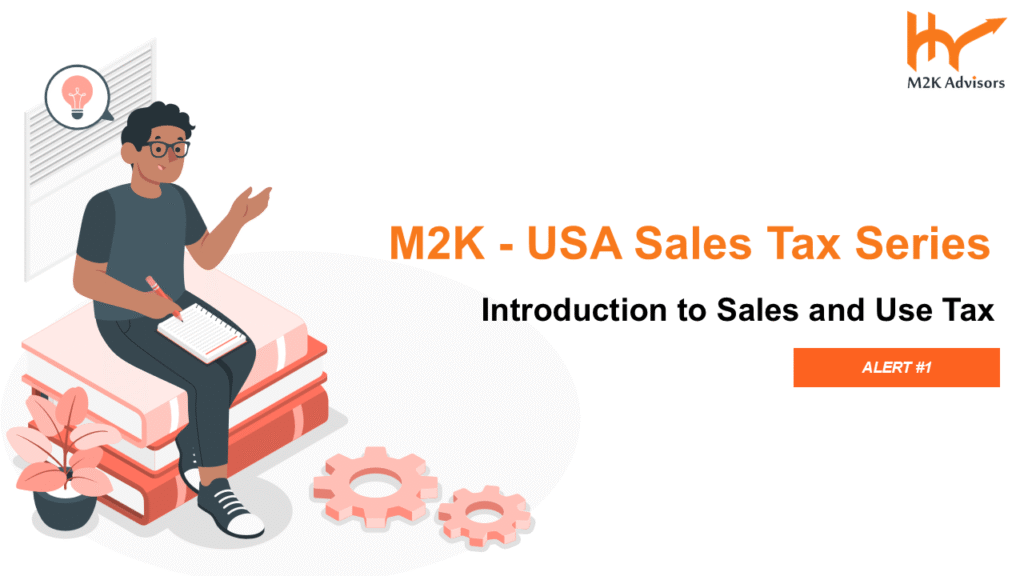
To help businesses navigate these complexities, M2K Advisors has launched the US Sales Tax Series. This series is intended to educate and simplify the core aspects of U.S. sales and use tax compliance. In this first alert, we begin with an introduction to the basics of sales and use tax, along with important concepts like exemptions, nexus, and compliance responsibilities.
Introduction to Sales Tax
In the United States, sales tax is a consumption-based tax, where the economic burden is borne by the consumer, but the responsibility to collect and remit the tax lies with the seller.
Unlike other countries with centralized tax systems, the U.S. does not impose a national-level sales tax. Instead, tax administration is handled at the state and local levels. Each state — and in many cases, counties and cities — defines its own tax structure, including rates, filing schedules, and rules for taxability.
In addition to the state-level sales tax, local jurisdictions such as cities and counties may also impose their own sales taxes, creating a highly fragmented system that businesses must navigate carefully.
Introduction to Use Tax
Use tax serves as a complement to sales tax. It is owed when goods or services are used, stored, or consumed in a state, and the seller did not collect sales tax at the time of the transaction.
Use tax is commonly triggered in situations such as:
- A buyer orders goods from outside their state, and the seller does not charge sales tax due to not having nexus in the buyer’s state.
- A buyer makes a purchase from a physical store in another state and brings the goods back to their home or business state.
The key distinction is that use tax must be reported and paid by the purchaser, not the seller. This shifts the compliance burden in use tax cases.
Some states require buyers to report use tax on their individual or business income tax returns, while others may require a separate use tax return to be filed.
States Without Sales & Use Tax
While sales and use tax is the norm across the U.S., there are a few states that do not impose either tax at the state level. These are:
- Delaware
- Montana
- New Hampshire
- Oregon
- Alaska (note: some local jurisdictions in Alaska may still levy sales tax)
Businesses operating in these states are not required to comply with state-level sales or use tax rules. However, if such businesses sell into other states, they may still be subject to out-of-state tax obligations under economic nexus rules.
Exemptions from Sales Tax
Sales tax is not always applicable — certain transactions may qualify for exemptions. These fall into several broad categories:
Product-Based Exemptions
Certain products are exempt from sales tax in specific states. Common examples may include basic groceries, prescription drugs, or manufacturing equipment.
Resale Exemption
When a buyer purchases goods with the intent to resell them, a resale certificate can be provided to the seller, and the sale may be exempt from tax. This avoids double taxation.
Exempt Entity Exemption
Some buyers, such as non-profit organizations, schools, or government entities, may be exempt from paying sales tax under state law.
Transaction-Based Exemptions
Sales that are infrequent or non-recurring — for example, a one-time sale by a business not normally engaged in selling that type of product — may qualify as exempt.
Use-Based Exemptions
If a product is used for a specific exempt purpose, such as manufacturing, agriculture, or pollution control, the sale may be exempt based on how the product is used.
Each of these exemptions requires appropriate documentation, and sellers must retain exemption certificates to validate non-taxed sales in case of audit.
What Should Businesses Do?
To manage sales and use tax obligations effectively, businesses should take the following steps:
- Identify the situs of sale – Determine the state with the right to tax the transaction, based on delivery location or service performance.
- Determine taxability – Understand whether the product or service is taxable in that jurisdiction.
- Check tax rates – Identify the state and local rates applicable to the sale.
- Assess nexus – Determine if physical, economic, or other forms of nexus are triggered in the state.
- Register – If nexus exists, register for sales tax in the respective state.
- Collect and remit tax – Collect sales tax from customers where required and file returns with the state.
- Maintain exemption certificates – Ensure proper documentation for exempt sales.
- Evaluate exemptions – Check if the transaction qualifies for any specific exemption under the law.
These steps form the foundation for tax compliance across multiple jurisdictions and help reduce exposure to penalties and audits.
Stay Tuned for More
This is just the beginning of the M2K Advisors’ US Sales Tax Series, which aims to provide practical and actionable insights for businesses operating across state lines. Upcoming alerts in the series will explore:
- Situs of sale
- Sales tax exemptions
- Determining nexus
- Registration and compliance
- Voluntary disclosure agreements
- Tax treatment of software and SaaS
For businesses navigating today’s increasingly complex tax environment, understanding the fundamentals of sales and use tax is a critical first step. Stay updated by subscribing to our alerts on www.m2kadvisors.com.